
Service
Staff Augmentation
Individual senior engineers embed directly into your team, report into your process, and ship in your codebase — no separate ioet workflow to manage.
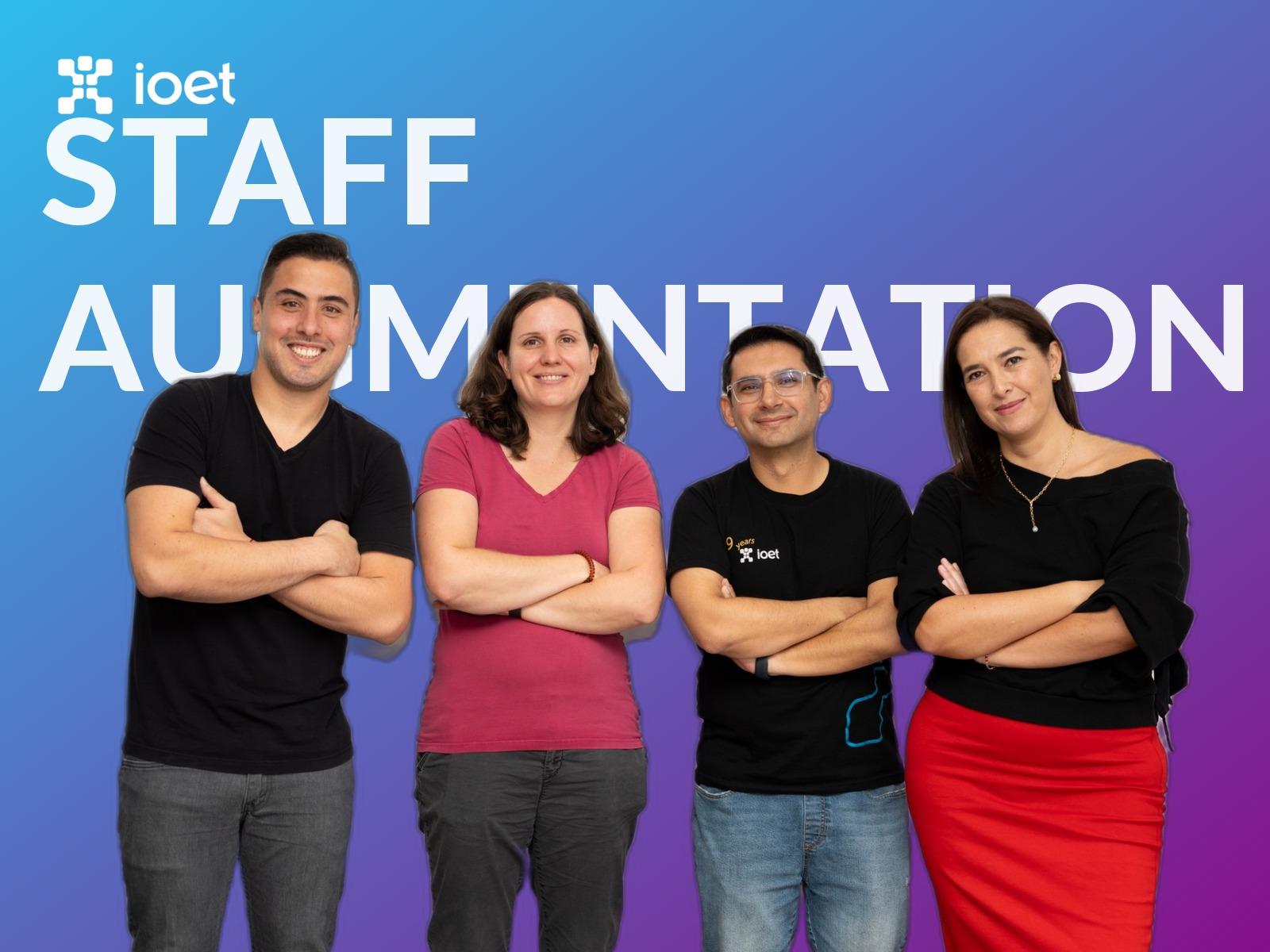
What it is
Staff augmentation places individual ioet engineers inside your existing team and reporting lines. They join your standups, your sprint planning, and your codebase — not a separate vendor process running alongside it. It's the right model when you know exactly what role you're missing and just need to fill it with someone senior, fast.
Who it's for
Engineering teams with a specific, known gap — a backend engineer, a mobile lead, a DevOps specialist
Teams that already have process and tooling in place and don't want a parallel workflow to manage
Companies that need to move faster than their local hiring pipeline allows
How engagement works
Scope the role
We talk through the gap — seniority, stack, domain context — so we're matching against a real role, not a generic profile.
Meet 2–3 matched engineers
You interview a short, pre-vetted shortlist. No resume dumps — only candidates who match the stack and seniority bar.
Start working, U.S. time zones
Engineers work overlapping hours with U.S. teams from Ecuador. Typical ramp to full productivity is measured in days, not months.
Relevant tech & tools
Frequently asked questions
How is staff augmentation different from dedicated teams?
Staff augmentation places individual engineers into your existing team and process. Dedicated teams stand up a self-contained squad (engineers, and optionally a lead or PM) that owns a defined scope of work. Most clients start with augmentation for a specific gap and move to a dedicated team once the scope grows.
How senior are the engineers?
ioet works with senior, retained engineers, not a rotating bench of juniors staffed against a contract. That's a deliberate positioning choice, not a marketing line — it's why clients keep the same engineers on their team for years, not months.
What's the typical ramp time?
Most engineers are contributing code within the first one to two weeks, once they have repo access and onboarding context. Time zone overlap with U.S. teams (Ecuador runs on U.S. Central/Eastern-adjacent hours) means daily standups and pairing happen live, not async across a 10+ hour gap.
Can we interview engineers before committing?
Yes — you interview a short shortlist before anyone joins your team. We don't place engineers you haven't approved.
Ready to talk about staff augmentation?
Tell us the shape of the gap and we'll follow up with next steps.